Athens is a big, busy city – one of the oldest and most interesting in the world. It is situated on a peninsula surrounded by water in the Attica region of the Greek mainland, and many of the highlights are spread far and wide.
The historical sites, like the Acropolis, are located in the city centre of Athens, which is a small area. You can easily navigate almost everything here on foot or there are tours you can do using Tuks-Tuks, E-Bikes and Segways.
However, many suburbs are only accessible by taxi or public transportation. These include the ports of Piraeus, Lavrio and Rafina as well as the lovely suburbs that make up the Riviera.
Your first interaction with Greek public transportation may occur when you need to get from Athens Airport to the city centre or to Piraeus.
If you’re planning to spend a few days in Athens, please make sure to check for alternative ticket options, as there are usually passes that have discounts for specific periods of time, such as the Ath.ena Card.
Athens Metro
The Athens Metro is the city’s main workhorse for getting around quickly and efficiently. It’s a classic urban metro system, mostly underground, designed for short to medium trips within the city and its immediate suburbs. There are only three lines, but they cover the places visitors actually need to visit, including Syntagma, Monastiraki, the Acropolis area, Piraeus, and Athens International Airport.
It’s fast, frequent and very easy to use, with clear English signage, modern stations and reliable timetables. Many stations double as small museums, with archaeological finds displayed behind glass, because of course they do, it’s Athens. Trains run frequently throughout the day and late into the evening, making it ideal for sightseeing, commuting and airport transfers.
For most visitors, the metro will be the primary transport system. It’s predictable, efficient and far quicker than buses or trams for crossing the city. The only real downsides are crowding during peak hours and limited reach beyond the greater Athens area.
Line 1 – the old Green line, connecting Piraeus port to the northern suburbs.
Line 2 – the Red line, links major stops in the Ancient Centre such as Syntagma, Acropolis, Omonia, and the southern districts.
Line 3 – the Blue line, takes you straight to and from Athens International Airport in about 45 minutes.

Athens airport metro

Pireaus Metro station


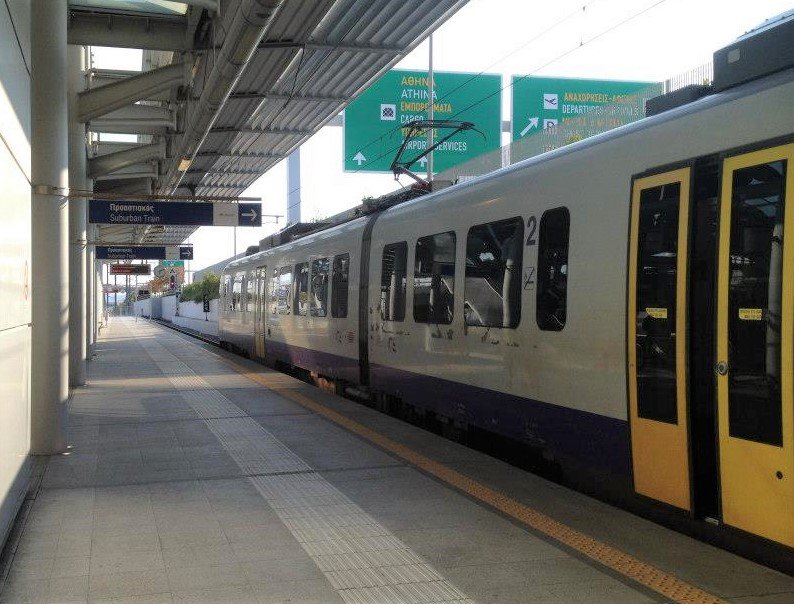
Suburban Railway of Athens
The suburban railway, known as Proastiakos, is the regional rail service.
Around Athens, it functions as a commuter and regional service, linking the city with outer suburbs and nearby regional centres such as Corinth, Kiato, Chalkida and parts of West Attica, as well as Athens International Airport. Trains make more frequent stops and are designed for practical, short-to-medium journeys rather than speed or comfort. This is the service used primarily by locals commuting in and out of the wider Athens region.
Beyond the suburban zone, long-distance intercity services take over. These trains are operated by Hellenic Train and run on the same north–south rail spine, but they are built for national travel. They have reserved seating, far fewer stops and significantly faster journey times.
From Athens, intercity trains run through Larissa, Greece’s main rail junction, and continue to Thessaloniki. This is the country’s busiest and most crucial rail corridor, and with recent upgrades and electrification, the fastest services now complete the Athens to Thessaloniki journey in around four hours.
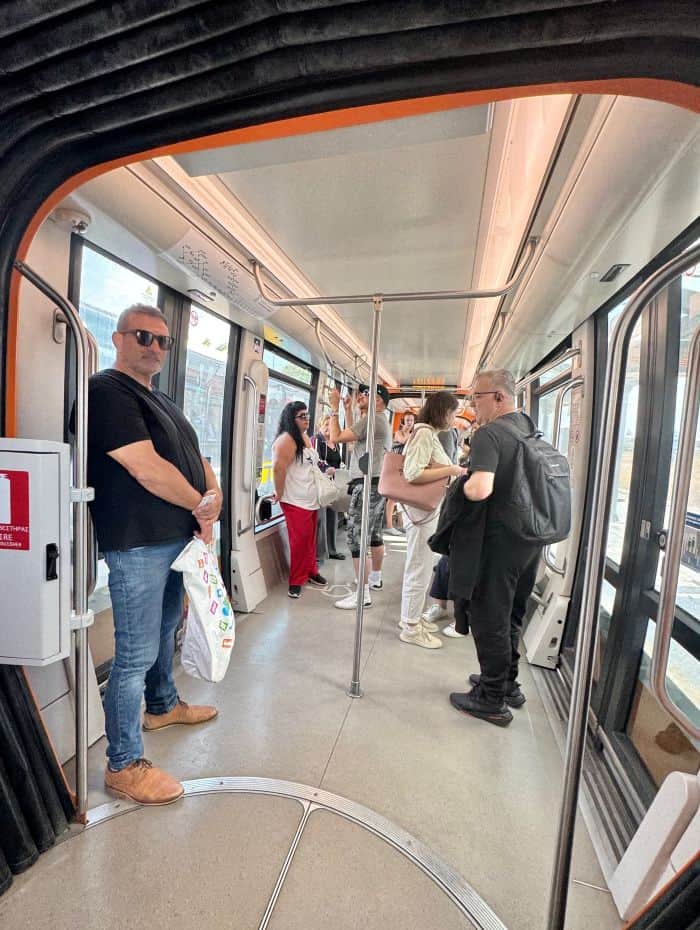
The Athens tram (light rail)system
The tram system links parts of Attica’s western coast, including Faliro, Glyfada, and Voula, with central Athens.
The tram services 59 stops in Athens, including central Athens, the Riviera, and Piraeus. The tram is scenic and easy: it’s slower than the metro but offers excellent views of the coast and gets you to beaches, marinas, and promenades.

Glyfada tram

The buses and trolleys in Athens
The vast network of public buses and trolley services covers most areas on the Attica peninsula. The city buses in Athens also serve a variety of suburban routes.
The OASA telematics app is usually the most effective tool for planning trolley and bus routes.
Athens KTEL buses
The huge KTEL bus network services numerous localities on the outskirts of Athens. Marathon, Sounion, the ports of Rafina and Lavrio, to name a few, and the cost is reasonable. For example, the price of a one-way ticket to Sounion is just over 6 euros on KTEL buses.
You can usually purchase a ticket on the bus, and it’s best to have cash on hand.
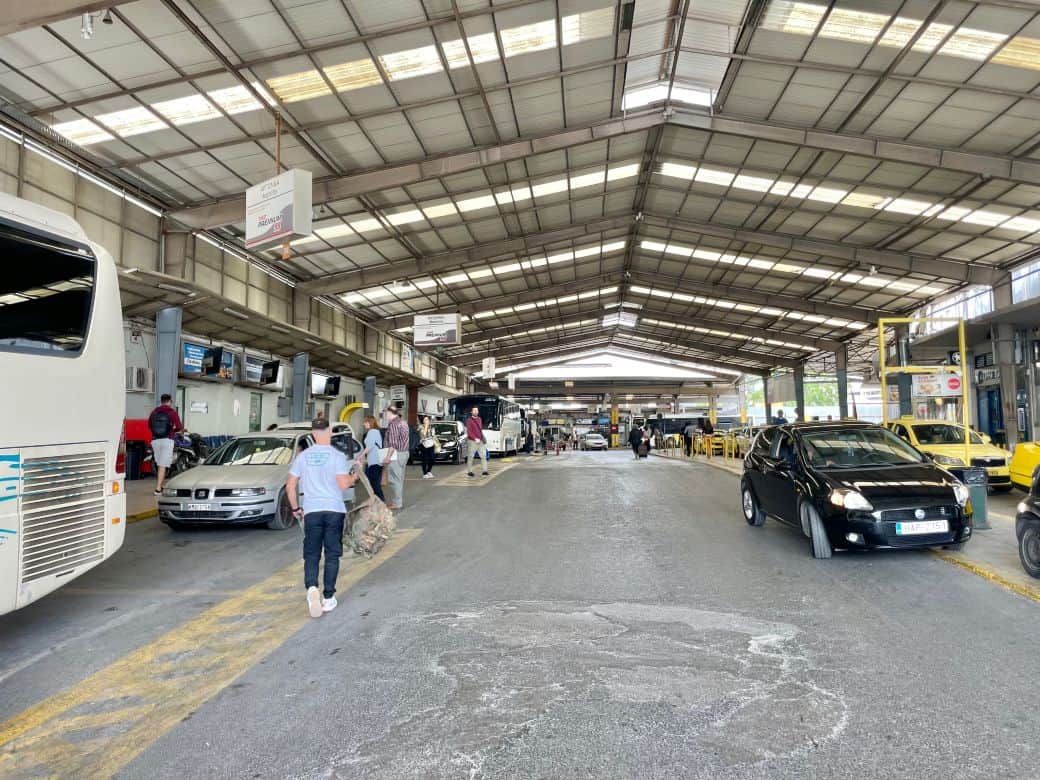
Kifissos Bus Station, Athens
Taxis in Greece
Official taxis are yellow in Athens; however, they may be another colour elsewhere in Greece.
Legally, a driver must use a metre that is prominently visible to the passenger. They must also accept credit and debit cards. Sadly, the only major scam in Greece is by Athens taxi drivers, who sometimes claim their meters are broken and charge inflated prices. Make sure the meter is on when you enter the car; if not, agree on a fixed price BEFORE you enter. If the driver refuses, simply go to the next taxi.
There are some other ways to do this that are easier and safer – see ‘Ride sharing’ below.
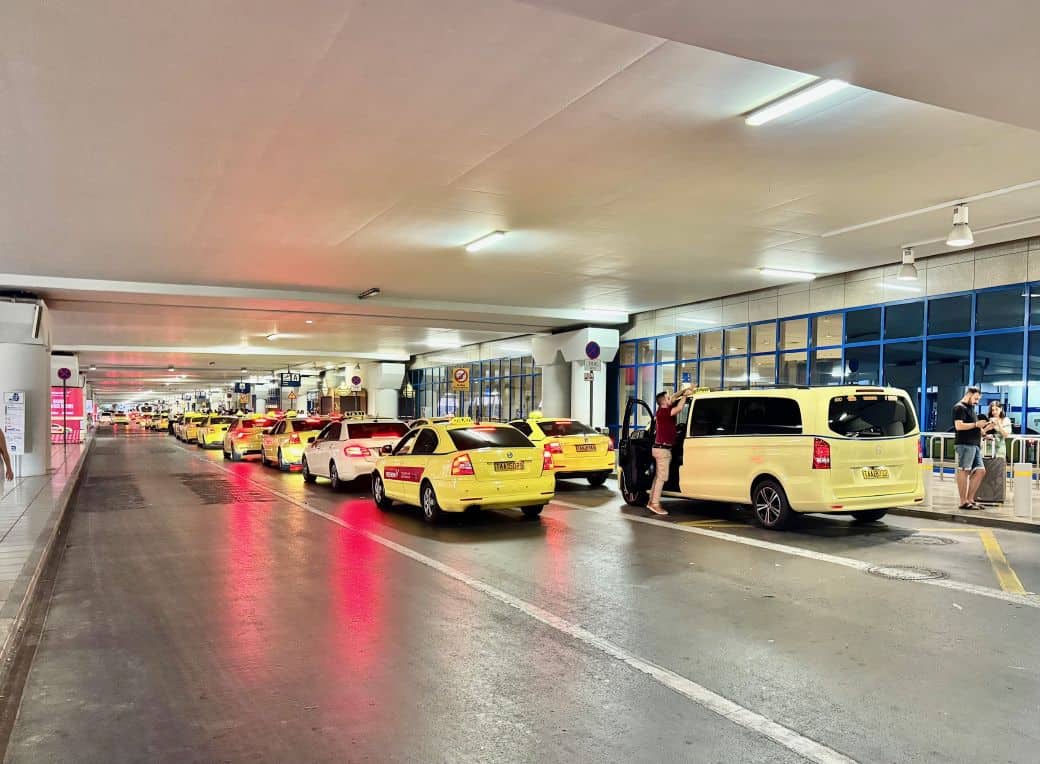
Athens Airport Taxis

Ride Sharing
Technically, there are no ride-sharing services in Greece.
You can, however, use your Uber app in Athens to call a taxi. The advantage of this is that you have a fixed quote, can track the car and its details, and don’t have to worry about paying on the spot.
Most Greeks use an app called Freenow, which was recently acquired by Lyft. It operates much the same as the Uber app, but more drivers have signed up to it.